
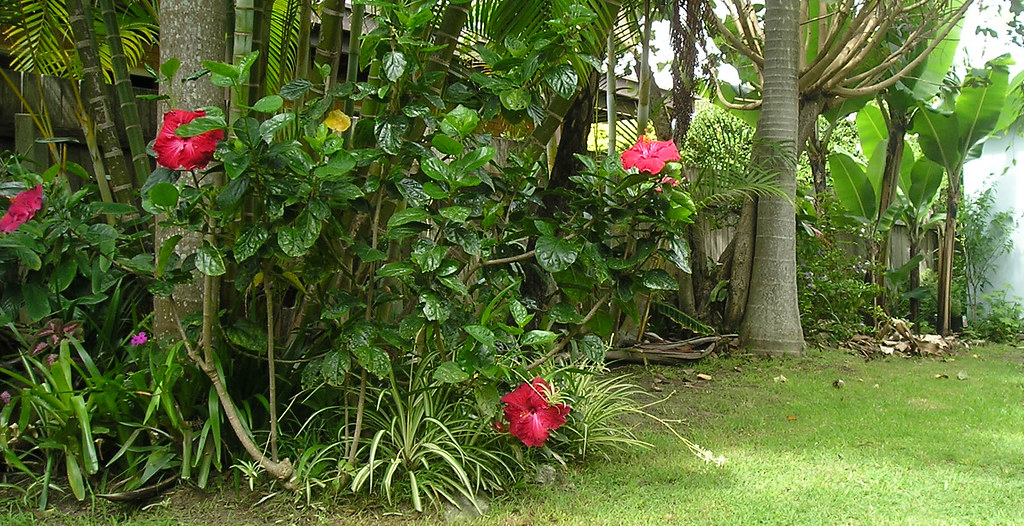
I have heard about a place in Brazil,where they have cultivated,more then 2500 different kind of Hibiscus.
In my Nursery,i just had this few ones,you can see at this Pictures

One of the few things that I don't like about my new house is the dining nook. It's placement in the kitchen fits in well with our entertaining style, everyone gathers around and watches Chad cook, but the nook itself is too small and feels like a pass through to the back yard. Its chandelier is uninspired and the window treatments are fine but a bit "sweet." On the feng shui floor plan it's located in the "Creativity" area, which makes these problems nearly disastrous for a photographer/ceramicist/artist. I'm looking for the perfect chandelier but I haven't found it yet, and I can't put up new curtains until Casey matures a bit and won't climb them. In the mean time I thought it would be clever to make a rosemary topiary to enhance this area.
 Putting a cooking herb in a dining nook seems like a natural enhancement. I love fresh rosemary but it doesn't always overwinter well in this climate so bringing it indoors is a good idea and making it into a topiary is creative. It's still a young topiary so it's a bit sparse on top, but it will have a ball on top to match the ball on the bottom. Round shapes, the color white, and the number three are all good elements for this area. So, I'm training the topiary into round balls (I'll probably eventually add a third ball to the top of it), I put it in a round white pot and placed it on a three tiered round white marble table. I topped the soil with decorative pebbles, three relatively large pebbles surrounded by smaller ones.
Everything was great until the autumn sun lowered in the sky until it stopped coming through the window all together. At that point, the topiary developed powdery mildew. The general treatment for powdery mildew is to give the plant good air flow and sunlight, so I took it outside on mild days. But now the weather is colder so I had to come up with a more aggressive treatment.
I looked at some of my older books on houseplants and they said the treatment for powdery mildew is to cut out and burn the affected areas of the plant and then spray harsh chemicals. Whoa! That sounds like overkill to me! First of all, I'm trying to create a topiary so I'm not very willing to cut out large sections of the plant. Second of all, powdery mildew isn't THAT serious of a problem.
So, I checked out some organic gardening websites and they said that the bad news is there is no cure for powdery mildew, but the good news is that it's easily kept under control and it's not a very serious problem. OK, that's more I like it. They suggested mixing 1/4 teaspoon of baking soda into a quart of water and spraying it onto the plant. If I had known the treatment was going to work so quickly I would have taken a "before" shot! "Before" it was covered with a white powder, the very next day it looks perfectly healthy! Woo hoo!
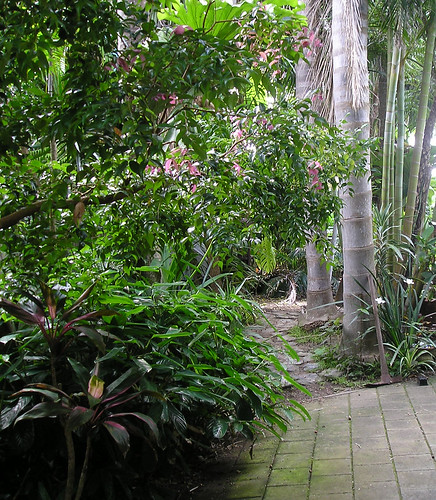 Garden Tour - Keith
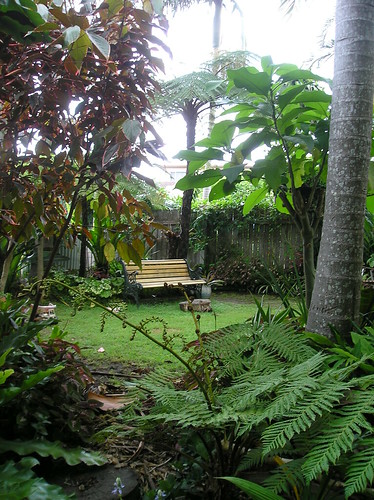
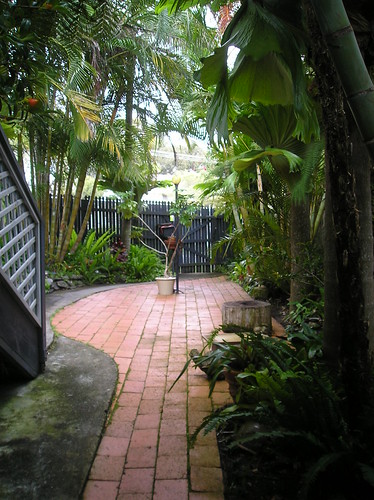


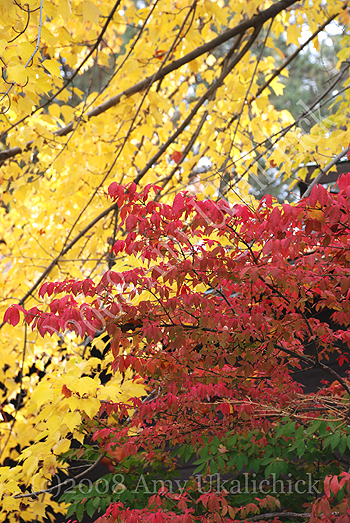
The Treasure Valley is nearing its fall foliage peak and I'm very pleased that my entire neighborhood is coloring up wonderfully! Back in Napa we had respectable fall color, but now that I'm living in an area with "real" seasons I'm being treated to dazzling colors. All of these photos were taken around my garden, but I must say that some of these views are "borrowed" from my neighbor's yards (meaning this is the view I have from my yard of their trees).
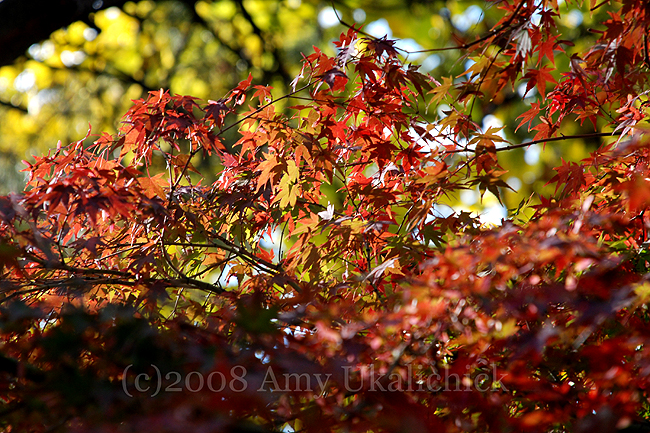
Last fall we bought this house but we weren't able to move in until last spring. Until we moved in, my in-laws took care of the house for us and they said that our Japanese maples didn't color up last year, the leaves just turned brown and fell off. I don't know what happened last year but this year they're giving us quite a show! I'm very pleased.
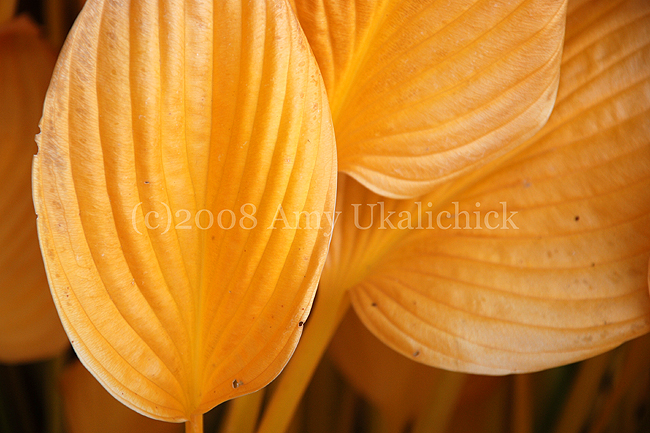
I never knew that hosta leaves colored up for fall! Wow!
Below is a slide show that I made of my phall pholiage photos (fall foliage fotos). Oh, and there's some phlowers (flowers) too!
Enjoy!


