
Saturday, September 20, 2008

Colours of the Year

Dont mix it up with Cannabis indica. Normally,i dont like Plants so much,that has to be protected in the Winter.
But this beautyfull Flower,i dont like to miss in my Garden.For many Months,they bring Colours into life
The Summer has passed and slowly is getting cold :(
I pass trough my Picture,of the Flowers,i have taken during the Summer,so,at least in my Mind,i can heath up a bit.
And when i see them, in front of my Eyes,then im sure,that there is no Painter equal like Nature.
I have a lot of pictures and i will start posting today and will add more,step by step
Wednesday, September 17, 2008
Spring Has Sprung in Australia: Photo of the Day.

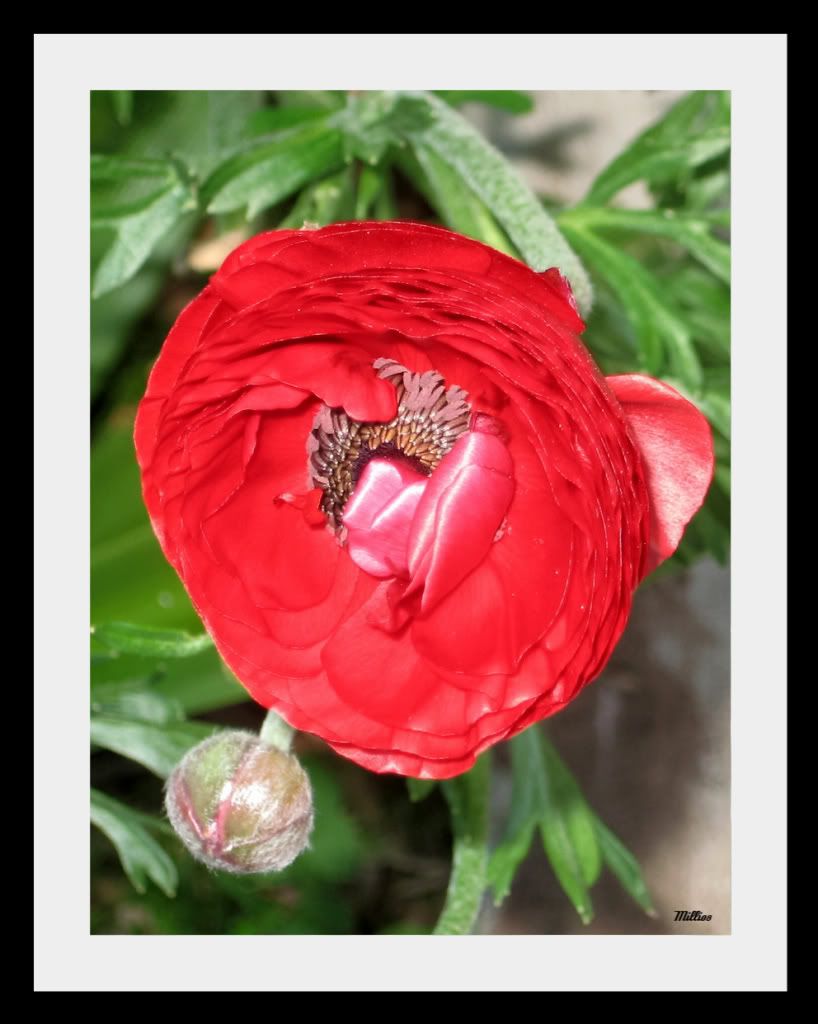
Garden Gurus - Pin up of the day
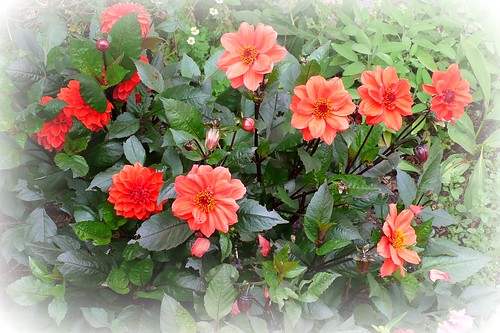
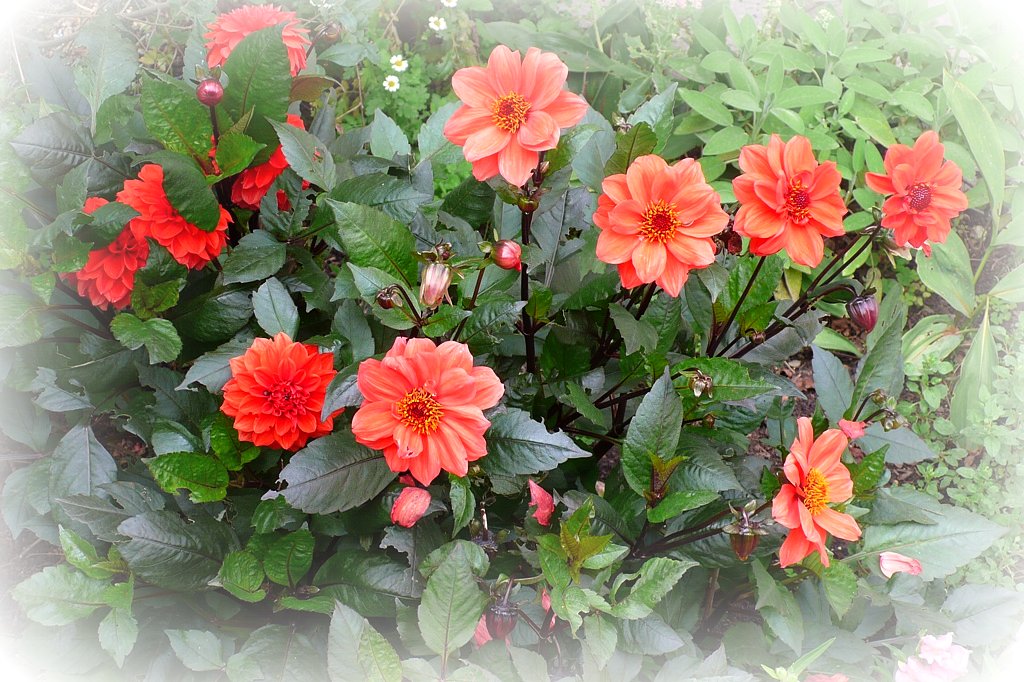
Our flower season is slowly going to an end in Switzerland, but the Dahlias decided to give a last burst of colour before they go to their sleeping quarters packed in earth in the cellar. In March they will awaken slowly but surely for another display of colour next year.
Tuesday, September 16, 2008
Some thoughts on snails
For those that live in countries with mild winters, I must explain that a garden in Switzerland usually makes a long sleep between October and February. During the winter we have temperatures beneath freezing, sometimes down to -15°C and there are few plants that live through these temperatures. The eggs laid by various insects remain beneath the earth’s surface waiting for a warmer sun to cause them to hatch.
I discovered some time ago that working on a computer can have its disadvantages. My shoulder was hurting and after a visit to the doctor I was given a computer ban for at least one week. I was not allowed to touch a computer. Not being able to go to work was one part of the problem, but my computer at home was also off limits, so how to pass time. It was Spring, my garden was just beginning to awaken after the Swiss Winter and I had a camera. As I was more or less housebound I started taking photos of my garden, but there were no flowers so I started discovering the insect world. Although many insects are a plague for the gardener, they all have their little purpose in their insect life. As I have three cats at home I avoid using poison in my garden as much as possible, meaning that my insects quite enjoy my garden from time to time, sometimes too much.
I have more than five hundred photos of insects, so here is part of the collection. I decided to dedicate this article to the snails.
In Switzerland there is no German word for slug; either you have a snail without a home, or one with a home. In the dry cold days there is usually no slug to be seen in any corner of the garden. As soon as the European April weather arrives with its rain and winds they seem to appear from nowhere; not just a few here and there, but an army arrives devouring any green leaf on its menu in no time.

So what do we do? There are many solutions to control the invaders. As some know, when the body of a slug comes into contact with salt, it dissolves. I just put myself in the position of a slug. If someone threw acid at me, I would dissolve as well and certainly would not enjoy it, so I decided I would not dissolve the slugs in my garden. Another method I heard about was a saucer filled with beer which attracts them. Sounds quite good, but I do not really want to feed my slugs on beer. So my solution is quite simple. If I see a slug sliming his way through the garden I just pick him up and throw him as far away as possible. I have a small garden so he usually lands on the surrounding lawns or in a neighbour’s garden. My distaste for handling slugs disappeared a long while ago. I can always wash my hands afterwards. It may seem that this is no good solution. I noticed once that a particular bush I had growing in the garden was not doing so well. Something was feeding on the leaves. One evening I went into the garden with a torchlight. The bush was covered in glistening white slugs.
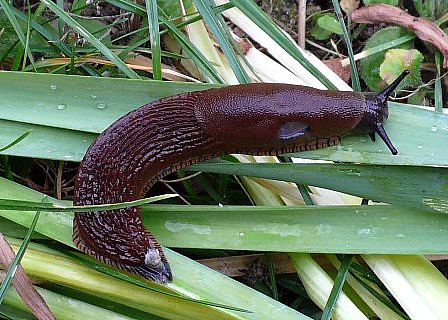
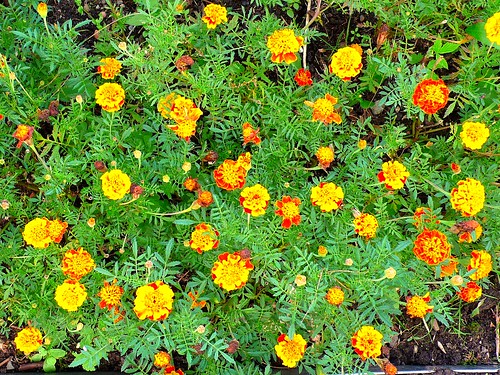
It was then that I decided just picking them up and throwing them out of the garden was not the solution. I then bought something known as snail corns here. They are blue and you can sprinkle them on the ground around the plants: a good solution, the snails seem to dehydrate and the curse is put to one side. I noticed that slugs particularly are addicted to a plant we call tagetes, I think commonly known as marigolds. If the slugs had knives and forks they would bring them along as well. The literally feed on their leaves. These corns are dangerous for other animals, but I am glad to say that my cats have had enough sense not to eat them and these corns are the only cure for keeping the slugs away from these plants.
Now to the snails with the houses: where I leave at the foot of the first chain of the Jura mountains we mainly have the so called white banded snail. They come in all sizes and designs. I have spent many happy hours taking their photographs. Here are a few examples. They are everywhere. It is generally the idea in Switzerland that snails with houses do no great damage in the garden and I must agree that I have never seen that complete plants have been lost through this type of snail.
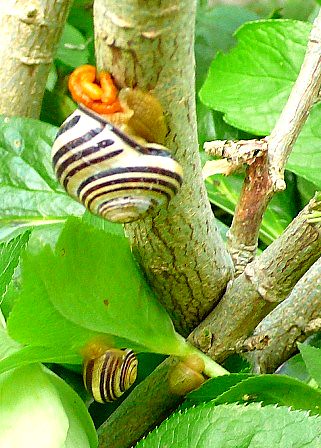
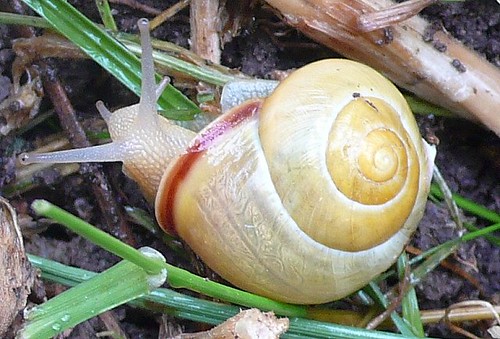
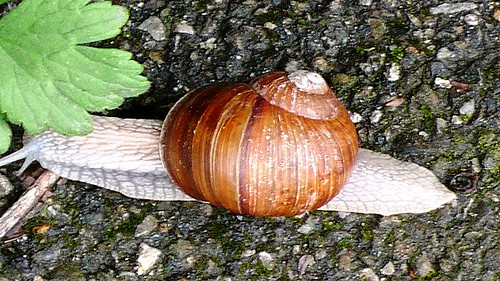
There are of course edible snails. These are known as “Weinberg” snails. A larger size than the others and a delicacy. The area where I live is not particularly their home, but I found one in my garden this year and naturally took his photo.
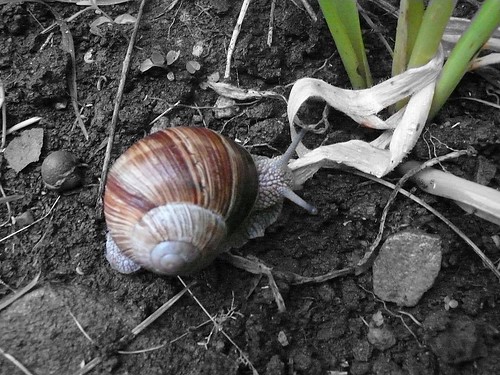
Yes, I have eaten snails, but there is not really a lot of meat on them. We usually melt herb butter on them.
I am not an expert on snails, but find them a thankful subject for photos. I am open to any advice where I may have given them the wrong name. I am used to naming insects with the German name and bought myself an insect book in english to find out their correct name.
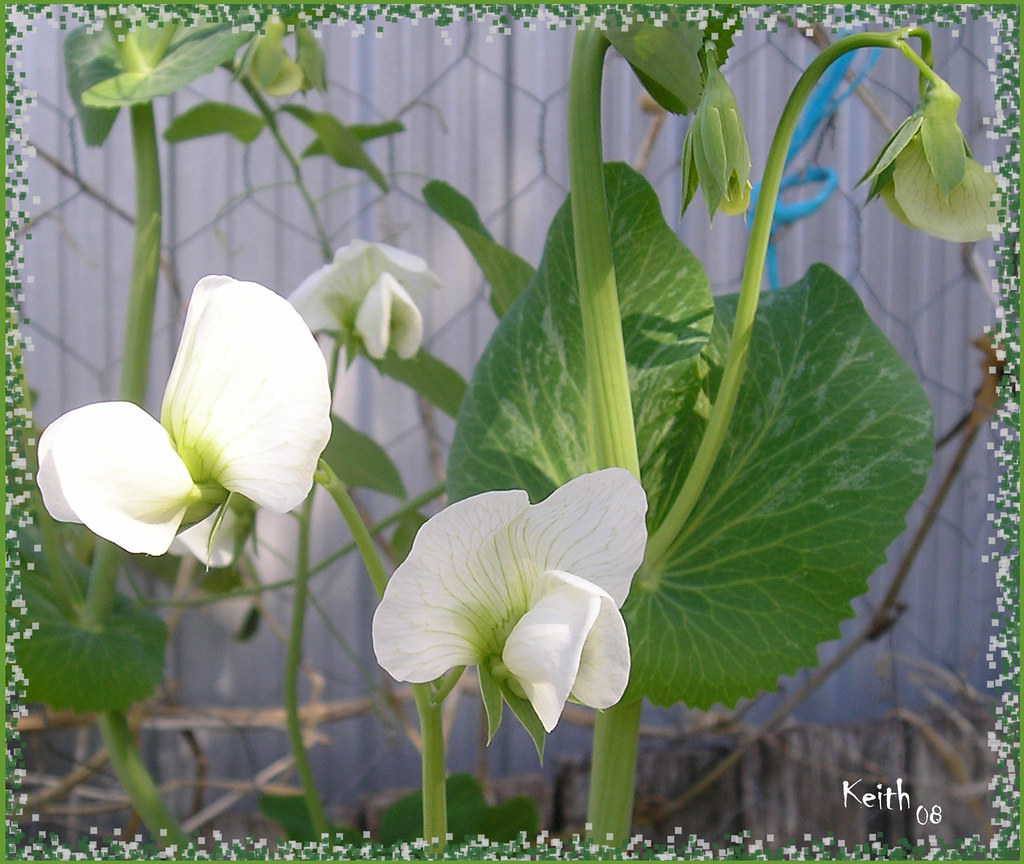 Snap Pea Flower
Sunday, September 14, 2008
Kauri Trees New Zealand


Northland in New Zeland is home to the mighty Kauri Tree. I am not sure if this is fit for a gardening blog but perhaps someone has a Kauri in their garden.  The Kauri is classed as one of the world's mightiest and ancient of trees. They can grow up to 50 metres tall. The timber is used for making furniture and souvenirs. Northland is still the home of great Kauri forests, they are a bit of a touristy thing now. Because of geographical isolation and pressure for the trees to be protected, they now are. The history behind them is fascinating.
The Kauri is classed as one of the world's mightiest and ancient of trees. They can grow up to 50 metres tall. The timber is used for making furniture and souvenirs. Northland is still the home of great Kauri forests, they are a bit of a touristy thing now. Because of geographical isolation and pressure for the trees to be protected, they now are. The history behind them is fascinating.
This is the forest of the Waipoua, on the West Coast of Northland. There are walking tracks to see the notable Kauri, small Kauri are seen everywhere but it is the giants of the forest that people come to see.

Tane Mahuta - Lord of the Forest
In Maori Cosmology (Maori are the native people of New Zealand) Tane is the son of Ranginui, the Sky Father and Papatuanuku, the Earth Mother. Tane tore his parents apart breaking their primal embrace and this allowed space, air and light and this alowed life to flourish, and so Tane is a life giver. All living creatures are Tanes children. Tane Mahuta is the largest known living Kauri Tree and no one knows it's age but it is thought to have sprung from a seed from around 2000 years ago. It is 51.5 metres high and the girth is around 13 metres.

Te Matua Ngahere - the Father of the Forest.
It has a height of almost 30 metres and a girth of 16.4 metres.
At the begining of the ice age a vast area of the kauri forests became buried. Layers of forests were buried by some catastophic event. There are many theories as to the cause of the buried forests, but no one knows for sure. Theories include, tsunami, a meteor hitting the land, earthquake.
Maori people had many uses for the tree like building canoes, tattooing, and they chewed the gum that came out of the tree. It is this gum that the tree became most valuable for. It was discovered that it made a great varnish and people came from all over to gather this 'gold"It was the Dalmation people that were the hardy gumdiggers and were the ones that stayed. A lot of their decendants are still in the Northland region.
Life on the gumfields was hard. Shelters were made of anything that was available, tin, wood, sacking. They were working long hours in wet conditions. Theyt would probe the ground looking for possible sources of gum then would dig large holes to find it. Many of these holes still are around today and it is the remenants that are found in the holes that scientists are now studying to find out the history and ecology of the buried forests.

.


Thursday, September 11, 2008
Ruby Chard Silver beet
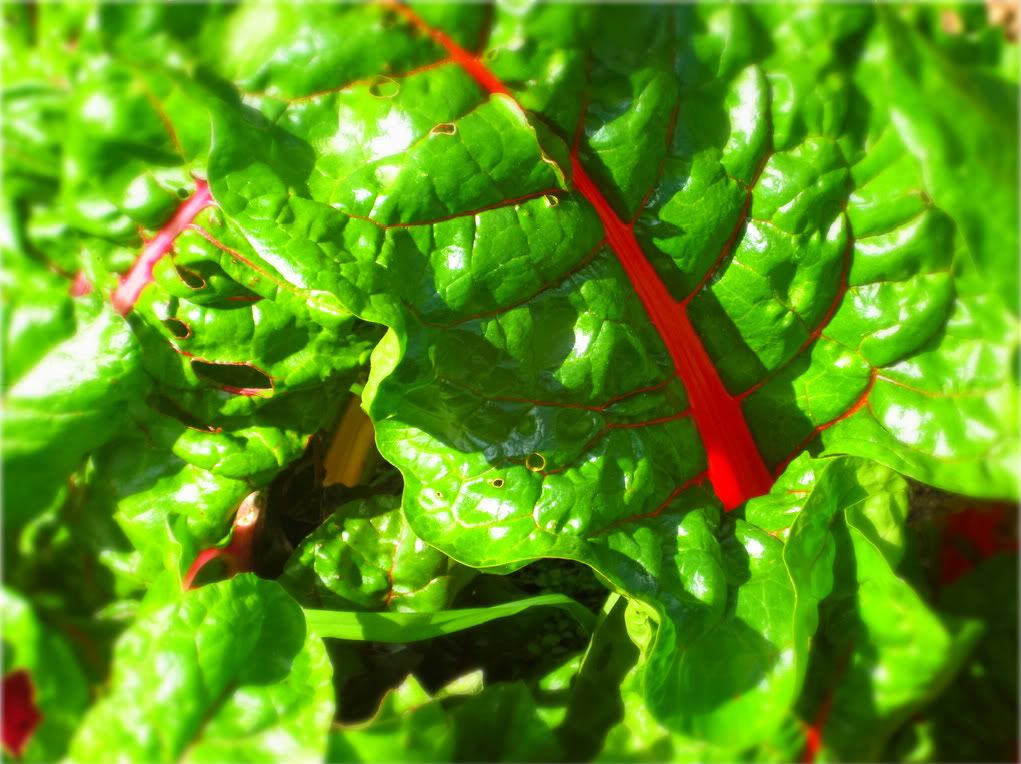
We actually only have a small patch for growing vegetables at the moment and one crop I love to plant wherever I can find a sunny space is silver beet.
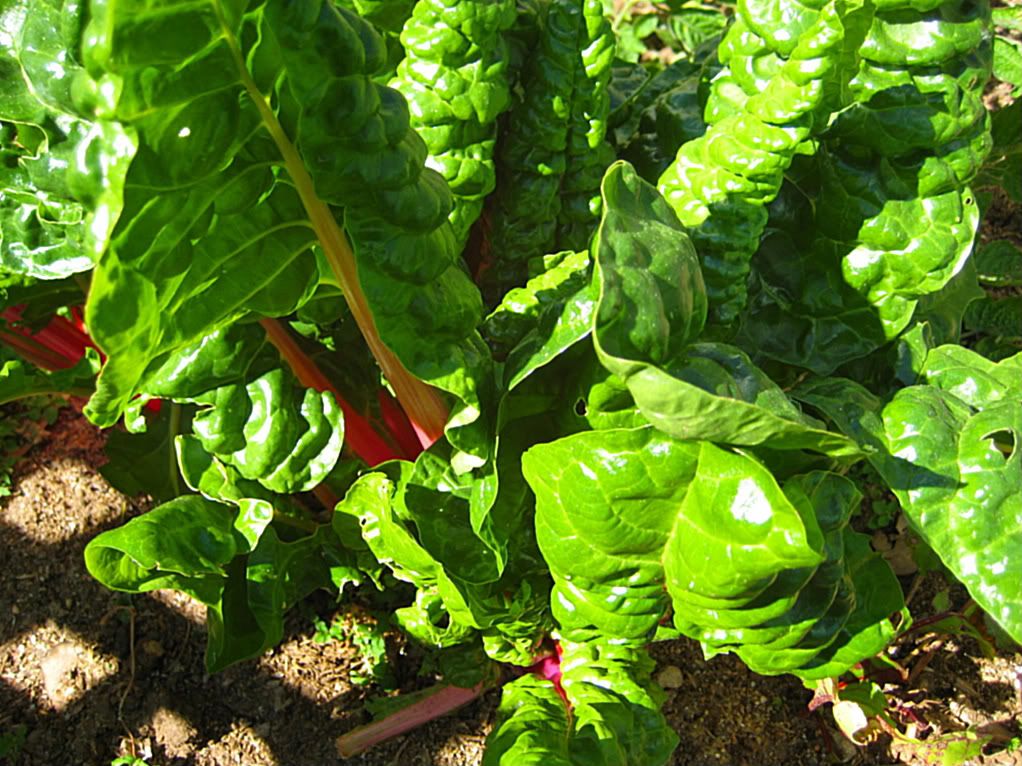
I was at the local garden wholesalers and noticed this lovely green silver beet with the most vibrant red stalks. Hence the name Ruby Chard. The nurseryman told me that it was a cross between silver beet and rhubarb. Anyway to cut a long story short I decided to give it a go. Oh and by the way Winter Spinach is another wonderful crop to grow if you can get it.
The Ruby Chard as my silver beet turned out to be, struggled along before our much needed rains came. We had a terrible summer of water restrictions and drought earlier in this year and everything either struggled along or died. Taking note of Keith's mulching methods I am.
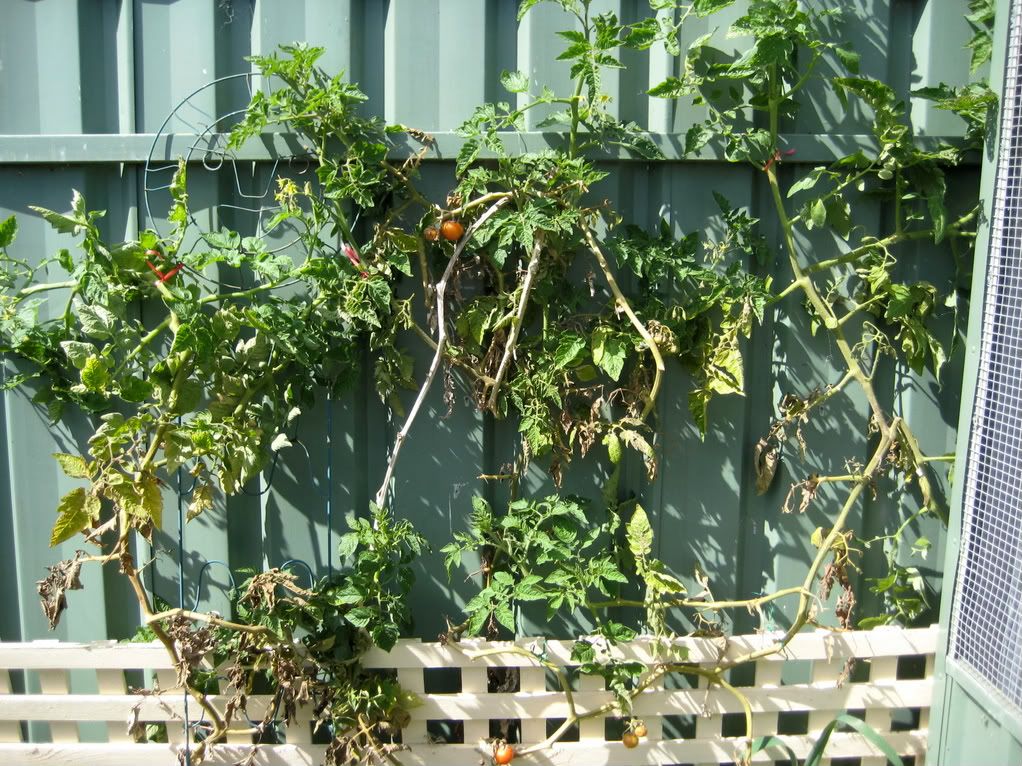
The Silver beet came into its own accompanied by the tyres full of potato plants the small tomato plant on the sunny fence which has made it through winter and is setting fruit now even as I type. Also in the garden are onions and beetroot oh and I must not forget the parsley. So the little patch is doing well.
Getting back to the Silver beet I have included a recipe for a tart here and because when I cook, I cook, off the cuff, so to speak from experience, not from exact quantities. I have copied the recipe from the net. Believe me when I say this Silver beet is a treat and teams up especially well with eggs or even with garlic and onion as a pureed soup. Go ahead give it a go and reap the rewards.
Degree of difficulty:
MediumYou need:
1 pre-baked 26-28cm pastry tart shell, in its tin
Filling:
30g unsalted butter
Pale parts of 5 medium size shallots (green onions), finely sliced
650-700g ruby chard or silver beet
4 free-range eggs
1¼ cups milk
½ cup cream
Sea salt, to taste
Freshly ground black pepper, to taste
¼ teaspoon nutmeg
100g mozzarella, grated
Method:
Preheat oven to 180C. Sit the tart shell in its tin on a baking tray and set it aside.
Melt the butter in a very large frying pan over medium/low heat. Add the shallots/green onions and cook them, stirring regularly, for 5 minutes.
Meanwhile, thoroughly wash the chard, shake off excess water, and slice it (including the stalks) finely. Add it to the frying pan and cook, stirring occasionally, for 5 minutes or so until it's wilted but the leaves are still deep green. (If there is liquid in the base of the pan, briefly increase the heat to boil it off.) Turn off the heat. Set aside.
Whisk the eggs to break them up, then whisk in the milk, cream, and a little salt, pepper and nutmeg to taste. (Check how salty the cheese is before you salt the mixture, as you may not need any extra.)
Spread the chard mixture evenly over the base of the tart shell. Sprinkle the grated cheeses evenly over this. Give the egg mixture another quick whisk in case it's settled a bit and drizzle it over the cheese. Scatter the almonds on top.
Bake the tart for 35-40 minutes, or until it's deep golden and lightly set. To check, insert the tip of a fine knife into the middle and gently press the sides of the cut apart. The filling should be softly set with no liquid running into the cut. Remove it from the oven and leave it to cool and settle for at least 10 minutes before serving. Then just slip off the outer ring of the tin, and gently slide the tart onto a serving plate.
Recipe courtesy of click here.
Enjoy!!
Cheers from Milli.
Tuesday, September 9, 2008
Food for Thought-Garden Guru Salute!
 Photo by Mia
Hey all Garden Gurus,
In a comment here I wrote "Guru Salute to all" and then Keith asked what a Guru Salute would be, so I thought maybe we could have a fun discussion and perhaps a poll about it??? lol
So, if everybody who wants to take part put their suggestions in the comment box here, we could maybe do a Poll for it in another blog lol?
I will start out with two suggestions: MAY THE FORK BE WITH YOU!
and PEAS ON EARTH!
Let's have fun with this says
Garden Guru Gnome Mia
Subscribe to:
Posts (Atom)